
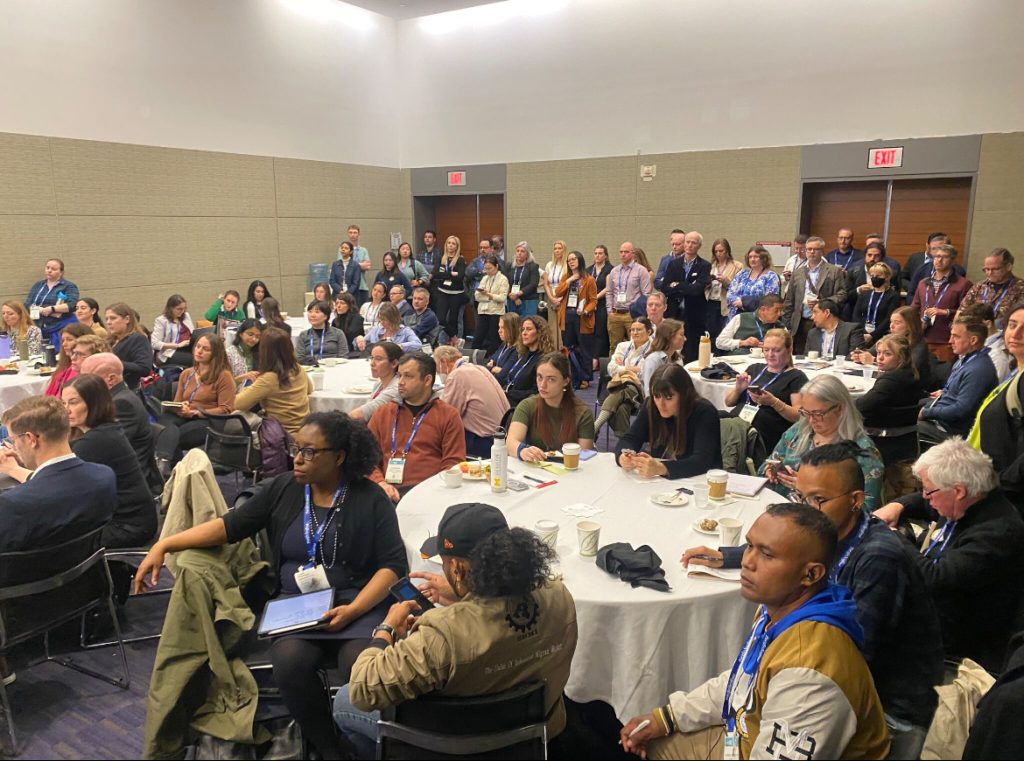
On March 16, 2025, Lusamerica Foods participated in a panel discussion at Seafood Expo North America in Boston, the largest seafood trade conference in North America. The session focused on human rights due diligence (HRDD) in seafood supply chains and brought together industry leaders, NGOs, and seafood companies to discuss practical strategies for improving labor conditions and transparency across the global seafood industry.
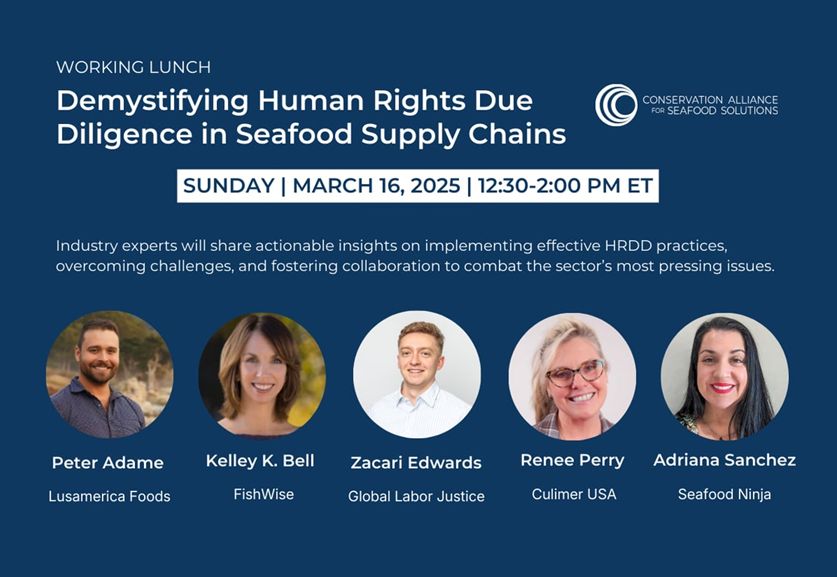
Representing Lusamerica Foods was Peter Adame, Director of Communications & Sustainability, who joined a panel of experts working on social responsibility in seafood supply chains.
Panelists:
- Peter Adame, Director of Communications & Sustainability, Lusamerica Foods Inc.
- Kelley K. Bell, Social Responsibility Director, FishWise
- Zacari Edwards, Senior Seafood Campaign Coordinator, Global Labor Justice
- Renee Perry, Vice President of CSR and ESG, Culimer USA
- Adriana Sánchez, Founder, Seafood Ninja (Moderator)
The discussion explored how seafood companies can begin implementing HRDD programs, identify labor risks in supply chains, and collaborate with partners to drive meaningful improvements.

Understanding Human Rights Due Diligence (HRDD)
The session opened with a high-level overview of HRDD presented by Kelley Bell of FishWise. Human rights due diligence is a process that companies use to identify, prevent, mitigate, and address human rights risks within their operations and supply chains.
In the seafood sector, this includes addressing issues such as forced labor, unfair working conditions, and lack of worker protections in fishing and aquaculture operations around the world.
Bell also highlighted how regulatory developments and evolving buyer expectations are increasingly pushing companies to take a more proactive role in monitoring labor conditions throughout their supply chains.
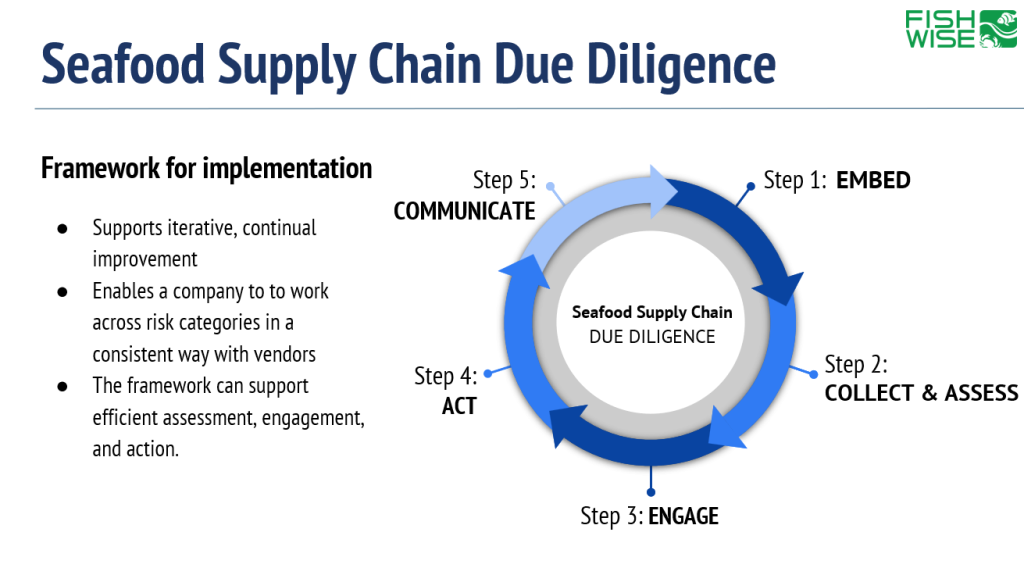
A graphic of Fish Wise’s HRDD framework for businesses is included below.
How Lusamerica Is Implementing HRDD
During the panel discussion, Peter Adame shared how Lusamerica Foods has begun implementing HRDD practices while operating with the realities many mid-sized seafood companies face: limited time and resources.
Rather than building systems from scratch, Lusamerica has focused on leveraging existing tools and collaborative resources.
For example, the company has used the RISE platform developed by FishWise along with FishWise’s seafood supply chain due diligence guidance. Lusamerica also participates in the network organized by the Conservation Alliance for Seafood Solutions to stay informed on emerging sustainability issues, tools, and best practices.
“These types of shared resources make it much easier for companies to begin implementing due diligence processes,” Adame noted during the discussion.
Mapping Supply Chains and Identifying Risks
A key early step in Lusamerica’s HRDD journey has been gaining a clearer understanding of its supply chains. The company began by prioritizing its highest-volume products and mapping where those products originate.
To identify potential labor risks, Lusamerica consults several publicly available tools, including:
-
Risk assessments profiles published by FishWise
-
The Human Rights Abuses & Risks Seafood Tool developed by the Certifications & Ratings Collaboration
-
Supply chain transparency resources such as the The Outlaw Ocean Project “Bait to Plate” database
These tools help companies identify high-risk geographies or supply chains that may require additional scrutiny or engagement with suppliers.
Setting Expectation with Vendors
Communication and transparency are a key component to supplier engagement.
Lusamerica shares its expectations with vendors through its Sustainability Policy and Supplier Code of Conduct, helping set clear standards for responsible sourcing and labor practices.
Because Lusamerica works with hundreds of supplier partners, technology also plays an important role. The company uses a supply chain compliance platform developed by Repositrak to manage documentation and track supplier certifications. Their internal inventory and traceability system also allows Lusamerica to run reports on each batch of seafood to understand their overall supply chains, identify gaps, and hone-in on vendors from high-risk geographies.
Lusamerica also prioritizes sourcing seafood that is independently certified by organizations such as the Marine Stewardship Council and the Aquaculture Stewardship Council, which include mechanisms for improving transparency and accountability within supply chains. While certification does not exclude fisheries or aquaculture operations, it can provide additional data compared to other sources.
Collaboration Across the Industry
Another key theme of the discussion was the importance of collaboration between seafood companies, NGOs, and industry coalitions.
Organizations like FishWise and Global Labor Justice help provide guidance, frameworks, and worker-centered perspectives that companies can incorporate into their HRDD programs.
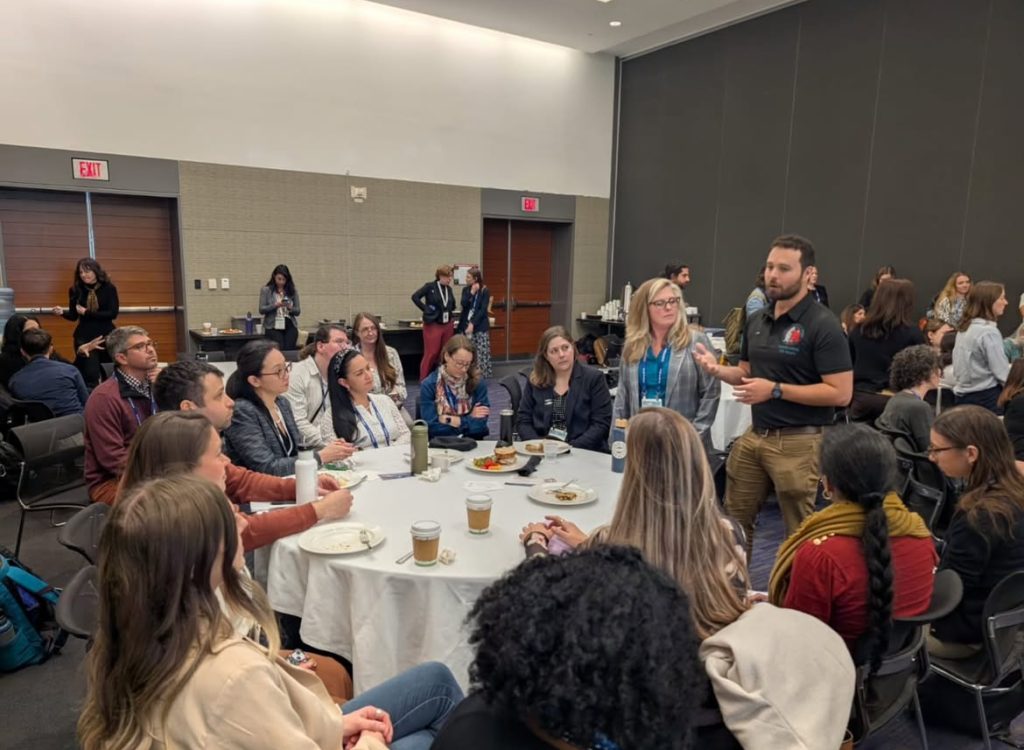
Breakout discussions following the panel allowed participants to explore practical challenges companies face when implementing HRDD, including how to engage workers effectively, create greater transparency with suppliers, and identify leverage points for improving labor conditions in high-risk regions.
Lessons for Companies Starting Their HRDD Journey
During the discussion, Peter Adame shared the following tips from his experience:
-
Work closely with internal teams such as quality control/food safety and buyers.
-
Develop a supplier code of conduct that clearly communicates expectations
-
Integrate HRDD into existing supplier onboarding processes
-
Take advantage of free tools and industry resources available through organizations like FishWise and connect with various NGOs/non-profits through the Conservation Alliance for Seafood Solutions
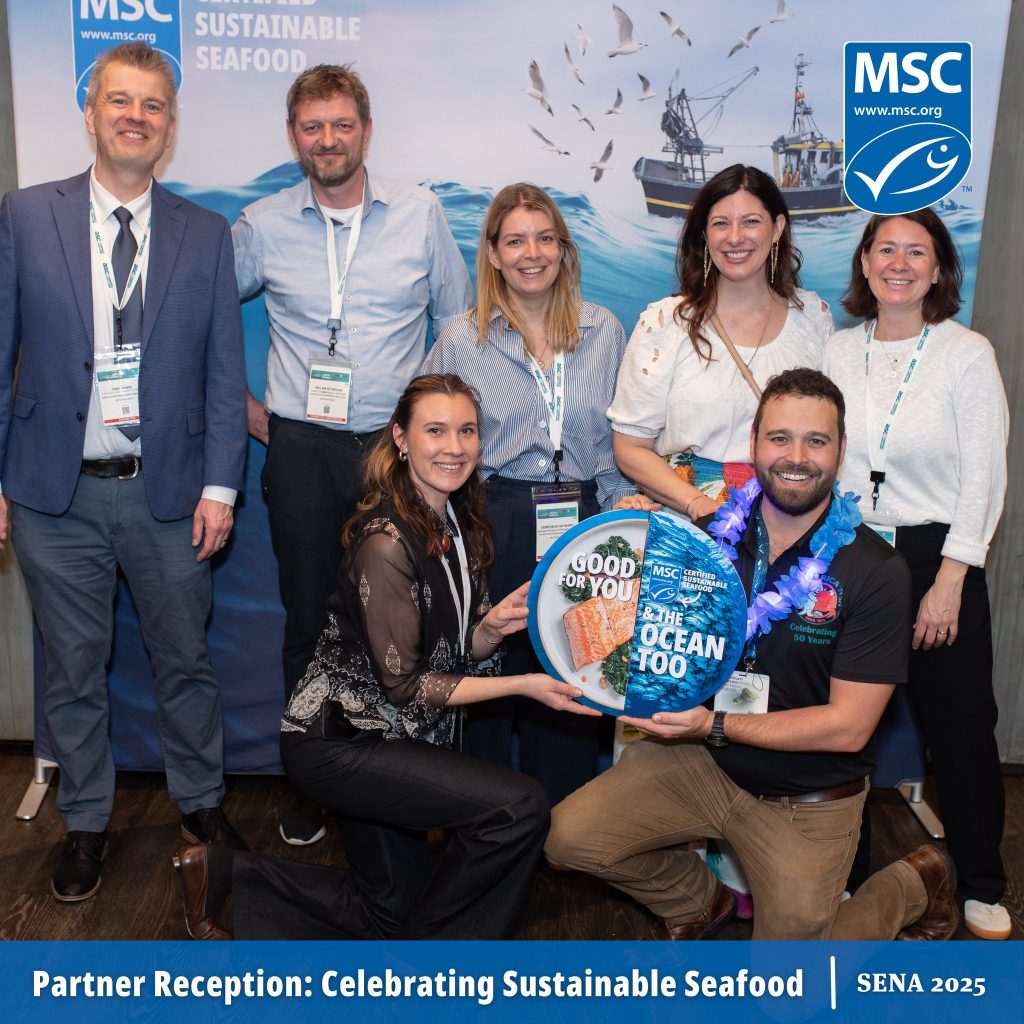

While in Boston, Peter connected with various Conservation Alliance partners including the Marine Stewardship Council (MSC), Aquaculture Stewardship Council (ASC), Conservation International, FishWise, PEW Charitable Trusts, and more.
Lusamerica Foods is proud to contribute to these important industry conversations and remain committed to supporting responsible seafood sourcing and stronger labor protections throughout the global seafood supply chains.Human rights due diligence is an ongoing and evolving process, but even small steps can help companies build more responsible and transparent seafood supply chains.
Learn More: Lusamerica’s Supply Chain Due Diligence