Lusamerica Foods, Inc. has a history of engaging with international fisheries management. For large pelagic species, like tuna, mahi, and swordfish, these fish swim across vast areas of ocean, so in order to manage the fishery, our planet’s ocean is divided up into four key management areas — The Easter Pacific Ocean, the Western Pacific Ocean, the Atlantic Ocean, and the Indian Ocean. The management bodies that are tasked with supervising and setting the rules for these fisheries are called Regional Fisheries Management Organizations (RFMOs). 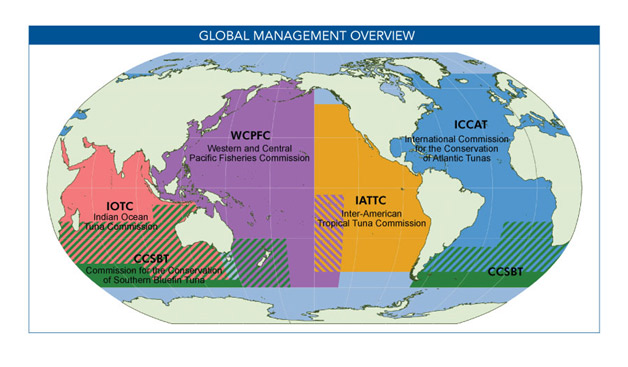
From joining the Global Tuna Alliance to Partnering with The PEW Charitable Trusts, The Ocean Foundation, and their All Tunas 2028 Campaign
Lusamerica became engaged with Regional Fisheries Management Organizations (RFMOs) in 2021 when we joined the Global Tuna Alliance, and initially our engagement was mostly virtual—participating in virtual roundtables with delegates, writing letters of support, and using our digital platforms to make public statements.
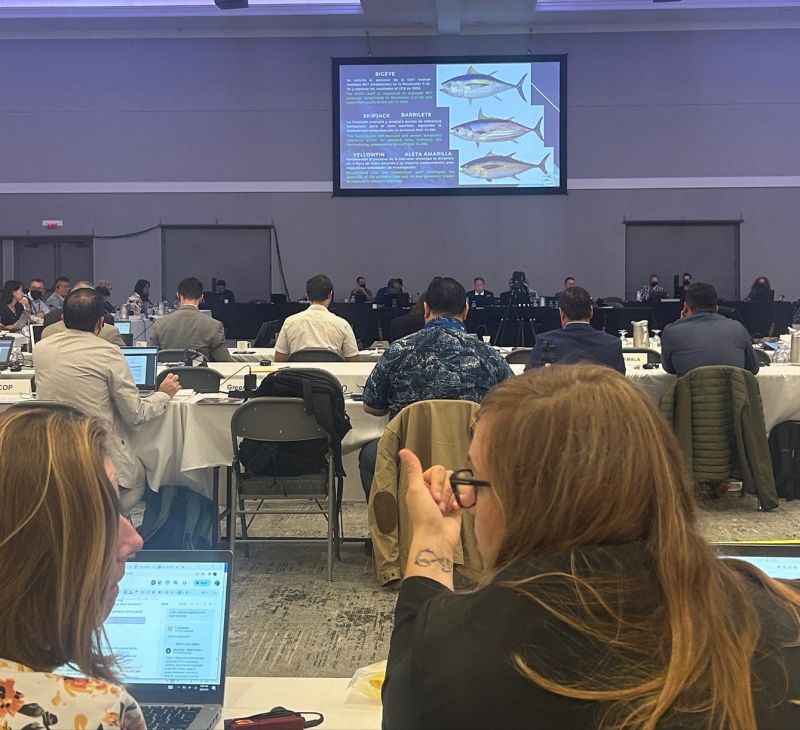
Lusamerica attended its first IATTC meeting in person in 2023, at the 101st meeting in Victoria, British Columbia, and found it really fascinating and eye-opening to be in the same room with so many distinguished fisheries representatives from around the world, and see first-hand how international fisheries management unfolds.
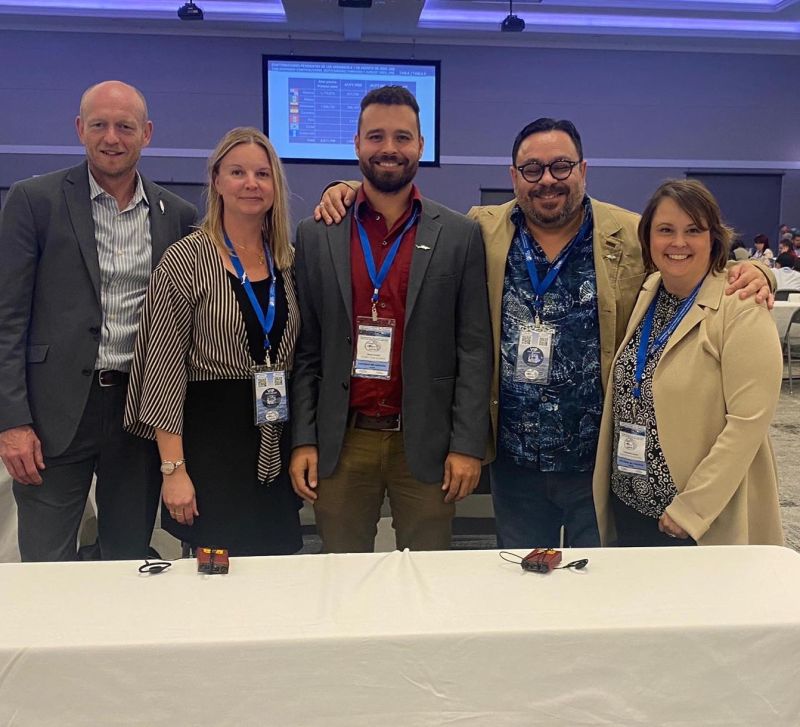
Lusamerica’s Sustainability Director Peter Adame (middle) with the Global Tuna Alliance delegation and The PEW Charitable Trusts

101st IATTC meeting held in Victoria, British Colombia, Canada at The Empress Hotel
Lusamerica’s Sustainability Director Peter Adame says,
“When I tell my colleagues and friends that I’m attending a tuna management conference, I imagine they picture cans of smelly tuna. But the reality of these conferences is very different: it feels like a mini United Nations conference, featuring some of the world’s leading fisheries ministers and representatives from around the globe all in one room.
These international negotiations are very political so developing relationships with our delegates from the countries we source seafood from is key. In 2026, Lusamerica joined The Pew Charitable Trusts, The Ocean Foundation, and HarvestStrategies.org’s All Tunas 2028 campaign because it gives Lusamerica a voice to directly advocate for the long-term protection of this important resource”
All Tunas 2028 gives seafood retailers, wholesalers, distributors, and other market representatives a voice to directly advocate for the adoption of the 13 remaining harvest strategies for the most commercially valuable tuna stocks by the end of 2028.
In addition to Lusamerica Foods, other companies that support the All Tunas 2028 campaign include Whole Foods Market, Oddisea Superfrozen Tuna, and SeaPact — a group of mid-supply chain seafood companies in North America.
HarvestStrategies.org is an excellent resource for learning about international fisheries management that provides thorough overviews, case studies, learning modules, videos, and more.
Next Up: Lisbon, Portugal for the 104th Inter-American Tropical Tuna Commission Meeting

Our sustainability director Peter Adame is attending the 104th Inter-American Tropical Tuna Commission (IATTC) meeting in Lisbon, Portugal which runs from the end of August to September 5, 2026. He’ll be representing Lusamerica thanks to the support of The PEW Charitable Trusts where he’ll be advocating for management procedures to be adopted which will support the long-term sustainability of the various tuna species found in the Eastern Pacific Ocean.
Adame says the upcoming meeting in Lisbon is particularly important because IATTC staff have put forward an interim, multi-species management strategy evaluation.
“We support the adoption of a management procedure for all four stocks of tropical tunas in the Eastern Pacific, as recommended by the scientific staff.
The management procedure is ready and should be implemented beginning in 2027. This would promote stability and sustainability for both the fishery and the market, while also allowing for increased fishing opportunities.
Moving toward science-based management procedures is critical to the seafood industry because it creates a more stable tuna supply chain.”
Question & Answer Interview
Below is some Q&A between Lusamerica’s Sustainability Director Peter Adame and journalist Victoria Carrillo from EFE Comunica–A Spanish-language news outlet. The Q&A has been translated from Spanish to English.
1. From your experience and from the industry’s perspective, how would you describe the progress that has been made in recent years in the sustainable management of tropical tunas in the Eastern Pacific?
Historically, progress has been slow because regional fisheries management organizations are largely political bodies, which can make reaching consensus difficult. However, I’m encouraged to see that progress is being made. Just this month, a historic agreement was reached to advance a long-awaited management plan for Pacific bluefin tuna, a species whose population had declined to just 2% of its historical level.
The IATTC also has a scientific working group focused on management strategy evaluations, which is creating greater opportunities for member governments to move toward selecting a harvest strategy at the upcoming September meeting. Additionally, while it is not a tuna species, we are encouraged to see that an updated stock assessment for mahi mahi is also underway for the Eastern Pacific Ocean.
2. What changes do you consider most significant in the way the IATTC is currently managing these fisheries?
There are many commitments to adopt tuna harvest strategies, but making that commitment does not guarantee that they will ultimately be adopted. As an industry representative, we are pushing to see these harvest strategies cross the finish line and become formally adopted.
One of the most important changes in fisheries management will be moving away from annual negotiations over quotas toward implementing a long-term plan, known as a management procedure, that provides stability, predictability, and science-based safeguards.
3. One of the issues coming before the next meeting is moving toward science-based management procedures. How important is this change for the industry?
Moving toward science-based management procedures is critical to the seafood industry because it creates a more stable tuna supply chain.
For those who are not familiar with management procedures, they are a pre-agreed plan for how a fishery will be managed. They establish the fundamental elements of an effective management plan, such as how data will be collected and how much tuna can be caught, based on models that have been tested in advance.
4. For those who are not familiar with the concept, what does it mean in practical terms to move from periodic conservation measures to a long-term management procedure?
Periodic conservation measures are essentially a band-aid, whereas long-term management procedures provide an ongoing approach to maintaining the health of a fishery.
With periodic conservation measures, delegates spend time each year debating short-term issues rather than agreeing on a long-term plan. Management procedures are a pre-agreed plan for how to manage a fishery over the long term. They establish the fundamental elements of effective management, such as how data will be collected and how much tuna can be caught, based on pre-tested models and pre-selected indicators.
HarvestStrategies.org has an excellent video that explains fisheries management using an air-conditioning analogy for a house. A basic house fan can be compared to periodic conservation measures, while an automated central air-conditioning system—with a target temperature, control rules, and certain limits—can be compared to a long-term management procedure.
People living in the same house may have different temperature preferences, but they need to reach an agreement on their targets. Once the control rules are established, the result is a comfortable and predictable temperature on a regular basis, without exceeding other important limits, such as the cost of electricity.
5. You participated directly in an IATTC meeting as part of the Global Tuna Alliance delegation. What did you learn firsthand about how these decisions are negotiated among countries?
I attended my first IATTC meeting representing Lusamerica and the Global Tuna Alliance in August 2023, during its 101st session in Victoria, British Columbia. It was fascinating to be in the same room with so many distinguished fisheries representatives from around the world.
When I tell my colleagues and friends that I’m attending a tuna management conference, I imagine they picture cans of smelly tuna. But the reality of these conferences is very different: it feels like a mini United Nations conference, featuring some of the world’s leading fisheries ministers and representatives.
They have an incredibly difficult task. You can’t easily count tuna because they are below the surface, and the nature of this industry represents one of the last large-scale commercial wild harvests for food remaining on our planet.
These delegates have to work together to determine the best way to manage the high seas of the world’s largest ocean. My own country struggles to agree on many things, and these fisheries managers have to find consensus with their international counterparts, who represent different agendas, economic interests, and fishing fleets.
These international negotiations are influenced by so many factors that developing relationships with delegates is key. Lusamerica joined The Pew Charitable Trusts and HarvestStrategies.org’s All Tunas 2028 campaign because it gives Lusamerica a voice to directly advocate for the long-term protection of this important resource.
6. How important is it for the different stakeholders throughout the supply chain—from fishermen to buyers and distributors—to participate in these discussions?
Fisheries management is so complex that it is critical to have a voice at the table; otherwise, the things that are important to you may not be considered.
In the United States, Lusamerica distributes products to some of the country’s largest foodservice companies and grocery store chains, many of which have robust sustainable seafood sourcing goals.
Ensuring that tuna is managed responsibly with its long-term sustainability in mind is important to our buyers, who need stability in supply, as well as to our customers, who want to meet their sustainable sourcing goals.
7. From the perspective of those who buy and market tuna, what concrete benefits would come from having more predictable, science-based management rules?
Predictable, science-based management rules will help maintain healthy tuna stocks, resulting in a more stable supply chain. Supply instability creates price volatility and also makes it more difficult to negotiate longer-term contracts with suppliers.
Lusamerica is advocating for the adoption of management procedures in the Eastern Pacific Ocean because they promote market stability and sustainability while also allowing for increased fishing opportunities.
8. What role does traceability play in this process? How far should it be possible to trace the origin of a tuna product?
Lusamerica is a signatory to The Nature Conservancy’s Tuna Transparency Pledge, which promotes 100% monitoring of industrial tuna fishing vessels while they are at sea.
This can be achieved through electronic monitoring and/or human observers as a way to create a more resilient and transparent tuna supply chain.
As part of this work, and Lusamerica’s existing sustainability initiatives, we have been developing a list of tuna fishing vessels and have participated in traceability exercises.
While data verification remains a challenge, we are working with our suppliers to conduct this type of data collection with the goal of creating a fully traceable supply chain.
9. Based on your experience, what obstacles could make it difficult for countries to reach agreements at the meeting in Lisbon?
It is very easy for delegates to disagree over specific details of what should be included in a robust management plan, which can make consensus difficult to achieve.
Delegates may choose to prioritize short-term gains or maintain firm political positions rather than work together toward a meaningful, long-term harvest strategy.
Even when everyone agrees on the science, they may disagree on what good fisheries management looks like. In addition, different fleet sizes and commercial fishing methods may be affected differently depending on the management measure being proposed.
10. How important is this meeting for the future management of tropical tunas in the Eastern Pacific?
The upcoming meeting in Lisbon is particularly important because IATTC staff have put forward an interim, multi-species management strategy evaluation.
We support the adoption of a management procedure for all four stocks of tropical tunas in the Eastern Pacific, as recommended by the scientific staff.
The management procedure is ready and should be implemented beginning in 2027. This would promote stability and sustainability for both the fishery and the market, while also allowing for increased fishing opportunities.
11. If countries are able to make progress in Lisbon, what concrete change could we expect in the management of these fisheries?
If countries are able to make progress in Lisbon, we expect that a management procedure could be adopted for all four stocks of tropical tunas in the Eastern Pacific, with implementation beginning in 2027.
This would represent a significant change: moving from periodic measures and negotiations toward a long-term management system that has been agreed upon in advance and is based on science. It would help provide greater stability and predictability for both the fishery and the market, while also allowing for increased fishing opportunities.
12. Why do you consider this to be a particularly important moment to advance sustainable management of tropical tunas?
I believe this is a particularly important moment because there is a concrete opportunity to move from commitments and periodic measures toward a long-term management system that is science-based and designed to maintain the health of these stocks while providing greater stability throughout the supply chain.
The upcoming IATTC meeting represents an important opportunity to turn years of scientific work and political commitments into concrete action that benefits both the health of tuna stocks and the communities and businesses that depend on these fisheries.